
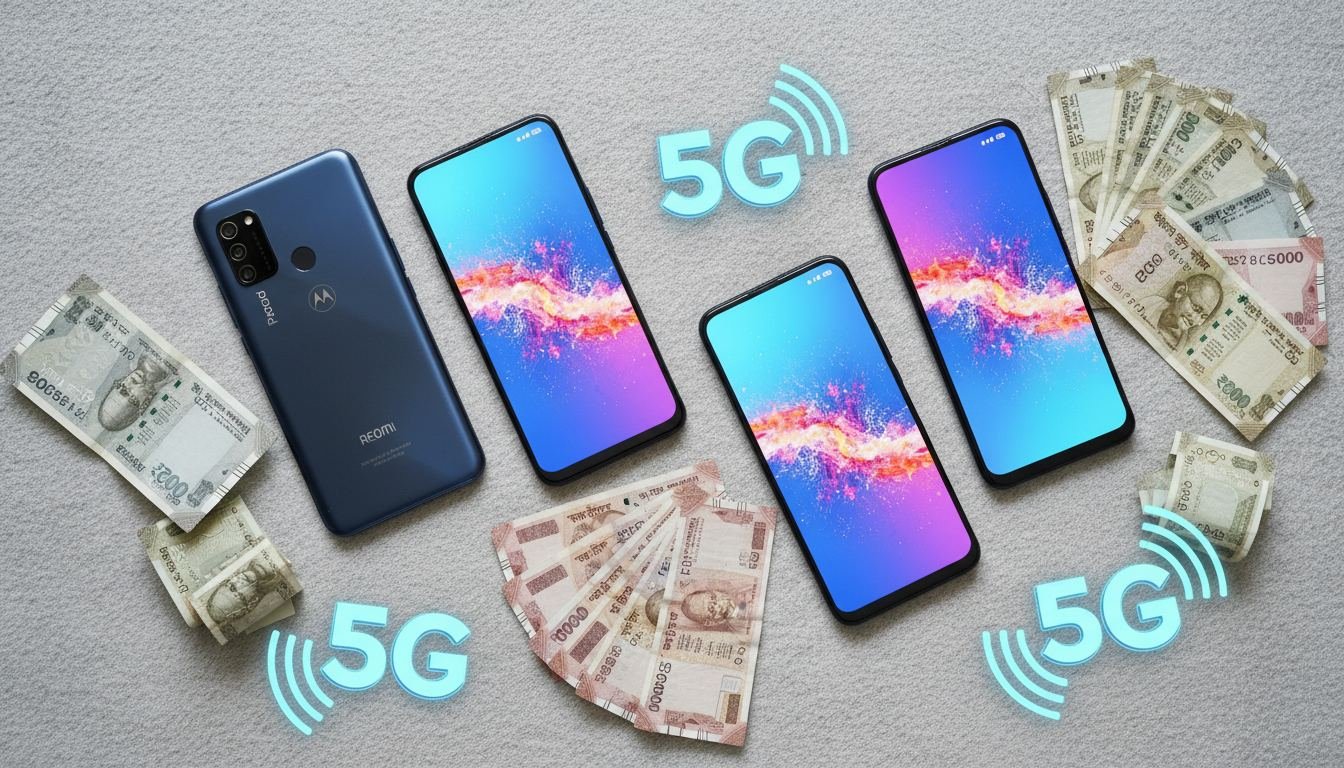
5G smartphones under ₹20,000 have moved from luxury territory to mainstream choice in India. Prices have dropped significantly, and brands like Vivo, Motorola, and Xiaomi now offer solid options within this budget. But not every phone in this range is worth your money. Some cut corners on battery life or software support. Others lock you into poor network bands. This guide walks you through what to actually look for, which 5G plan makes sense for you, and which specific devices deliver.
What specs actually matter in a 5G phone under ₹20,000?
You’ll see dozens of specifications on spec sheets. Most don’t affect your day-to-day experience. Focus on these five.
Processor: The brain of your phone. Look for MediaTek Dimensity or Snapdragon series chips. Both handle everyday tasks, gaming, and multitasking without lag. MediaTek Dimensity processors power most phones in this bracket and are proven performers. Snapdragon chips tend to cost more but offer slightly better efficiency.
RAM and storage: 6GB RAM is the bare minimum. 8GB is noticeably smoother for switching between apps and streaming. Storage: aim for 128GB if you stream everything, or 256GB if you keep photos and apps offline. Most phones in this range let you expand storage via microSD card, which buys you flexibility.
Display: Refresh rate matters more than screen size. A 90Hz or 120Hz display feels dramatically smoother than 60Hz when scrolling, gaming, or watching video. This is one area where your eyes notice the difference immediately. Resolution is secondary—Full HD is enough at this price.
Battery and charging: Buy a phone with at least a 5000mAh battery. Anything less and you’ll hunt for a charger by evening. Fast charging of 33W or higher matters because it means you’re not tethered for hours. A phone that charges to 80% in 30 minutes is more practical than one needing 90 minutes.
Software support: Check how often the maker releases security updates. Samsung and OnePlus have good track records here. Regular updates patch security holes and keep your phone stable for years. A phone that gets updates for three years is worth more than one abandoned after one year.
How to choose a 5G plan that matches your phone
Your phone is only half the equation. You need a plan that works where you live and how you use data.
Check network coverage in your area: 5G rollout in India is expanding rapidly, but it’s not nationwide yet. Check your telecom provider’s coverage map before signing up. Some areas have 4G only. If you’re in a city, 5G is likely. If you’re in a smaller town, you might wait months. This matters because paying for 5G on a 4G-only network wastes money.
Compare data benefits: Look at the actual data you get each month, not the marketing language. Some plans offer unlimited data but throttle speed after 100GB. Others give 50GB at full speed. Know your usage. A heavy video watcher needs different benefits than someone who mostly texts and browses.
Lock in your provider early: Once you pick a provider, stay with them for at least a few months. Switching frequently gets flagged by telecom systems and can slow your connection. Your phone is future-proof for 5G, but your plan choice affects experience today.
Best 5G smartphones under ₹20,000 to consider
The market shifts regularly, but as of late 2026, these models consistently deliver. Compare them on your priorities—battery life, camera, or raw speed.
| Model | Key Strength | Best For |
|---|---|---|
| Motorola Edge 70 Fusion | Battery and charging | Heavy users, outdoors |
| Vivo T5 Lite | Balanced performance | General use, everyday tasks |
| Xiaomi models (various) | Value for money | Budget-conscious buyers |
The Motorola Edge 70 Fusion stands out for endurance. Its large battery and fast charging mean real-world reliability. The Vivo T5 Lite offers polish across the board—no weak points, no surprises. Xiaomi’s range is broad; you’ll find options emphasizing camera, speed, or battery depending on your preference.
Phones from established brands typically get longer software support. That translates to security patches and bug fixes well into your ownership. New brands might offer flashy specs but disappear from support within a year.
Key takeaways
- Processor and RAM trump megapixels: A fast chip and 8GB RAM matter more for daily use than a 108MP camera at this price.
- Battery life is non-negotiable: 5000mAh minimum. Fast charging (33W+) isn’t luxury—it’s practical.
- Check 5G coverage before buying: Your city matters more than the phone’s specs. No 5G network in your area? A 4G phone is smarter.
- Software support determines lifespan: A phone that gets three years of updates is worth ₹2,000 more than one abandoned after one year.
- Compare actual data benefits: “Unlimited” plans often have hidden caps. Read the fine print.
What to avoid
Don’t buy based on processor brand loyalty. Both MediaTek and Snapdragon are solid in this price range. Don’t prioritize a massive display over battery life—you’ll regret it daily. Don’t assume every 5G phone is a good deal; some brands load bloatware that slows performance within months. Don’t switch providers constantly; it disrupts network optimisation on your phone. As we reported earlier, new models and price hikes happen regularly, so compare timing before committing.
How to test a phone before buying
If you’re shopping in a retail store, run these checks.
- Open 3–4 apps simultaneously and switch between them. Does it stutter?
- Play a video. Does the screen feel smooth at high refresh rate?
- Check the battery health using the phone’s settings. A used unit below 80% health isn’t worth full price.
- Load a website. How fast does it render?
- Ask the shopkeeper for the software version. Is it current or outdated?
- Hold the phone for two minutes. Does it heat up?
These five-minute tests tell you more than any spec sheet.
Network bands and compatibility
5G in India operates on specific frequency bands. Your phone must support them. Major bands include n78 and n81. Phones from reputable brands in India automatically support these. But if you’re considering imports or grey-market units, check the band list first. An incompatible phone might never access 5G even if your plan includes it. Stick with phones sold officially in India by recognized retailers or brands. According to Gadgets360, checking band compatibility before purchase prevents buyer’s remorse.
Why 5G matters now, not later
5G networks are rolling out across India’s major cities. By 2026, it’s not experimental—it’s becoming standard. A 5G-ready phone bought today won’t feel outdated in three years. You’re not paying extra for future features that might never arrive. You’re buying into infrastructure already being deployed. This makes a ₹20,000 5G phone a smarter choice than a 4G phone at the same price, assuming your city has coverage.
FAQ
Can I use a 5G phone on a 4G network?
Yes. Your 5G phone works perfectly fine on 4G. It simply won’t access 5G speeds until your provider’s network reaches you. Think of it as future-proofing—you’re not losing money today by buying 5G capability you can’t use yet.
What’s the real difference between 90Hz and 120Hz refresh rate?
Both feel smooth compared to 60Hz. The difference is noticeable if you game heavily, but minor for casual scrolling. Save money by choosing 90Hz if you’re budget-conscious; splurge on 120Hz only if smoothness is your priority.
Do I need 8GB RAM or is 6GB enough?
6GB works fine for most users. 8GB is noticeably better if you keep 10+ apps open, stream video while texting, or play heavy games. Most buyers under ₹20,000 don’t notice the difference. Buy 8GB if you can afford it—you’ll appreciate it later.
How long will a phone under ₹20,000 last?
That depends on software support, not price. A phone with three years of updates lasts 4–5 years of practical use. One abandoned after one year degrades much faster. Check the brand’s update history before buying.
Which 5G plan should I pick if I’m a light user?
Look for plans offering 30–50GB monthly at full speed. You won’t use unlimited data, so don’t pay for it. Check your provider’s coverage map to ensure they serve your area with 5G. Cheaper plans often have lower network priority, which matters during peak hours.
Do all phones under ₹20,000 have the same processor?
No. Some use MediaTek Dimensity, others Snapdragon. Both are solid. MediaTek is more common in this bracket because it’s cheaper for manufacturers, which saves you money. Snapdragon phones at this price are less common but offer similar real-world performance.
Is buying online or offline better for 5G phones?
Online usually costs ₹1,000–2,000 less and offers easy returns. Offline lets you test the phone first. If you’re uncertain about specs or feel, buy offline. If you know exactly what you want, save money online.
Also read
- Google’s Gemini Intelligence Now Rolling Out to Motorola, Samsung Devices Across India
- Xiaomi and Vivo Set for Major Upcoming Smartphone Launches in India; Price Leaks Emerge
Last updated: 19 November 2026
