
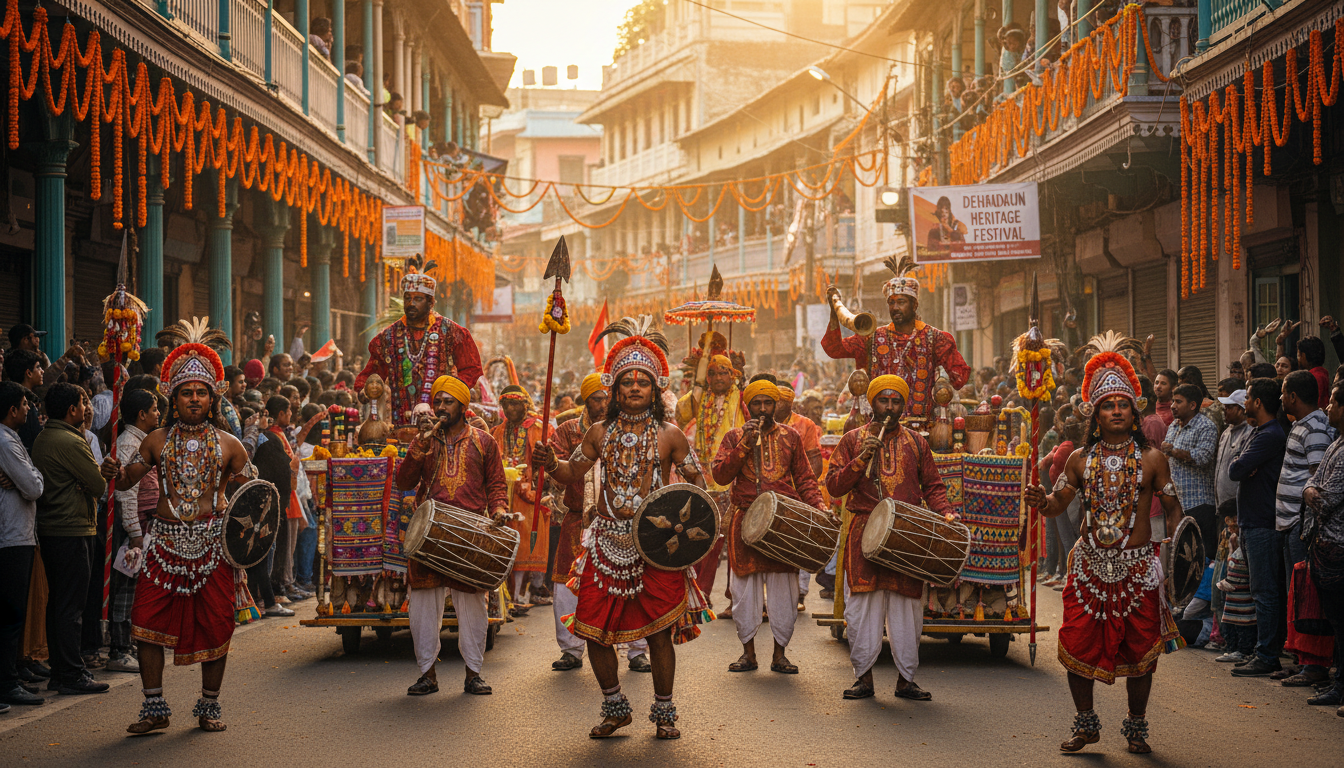
The Adi Gaurav Mahotsav Dehradun kicked off with a ceremonial procession that wound through the city, drawing tribal communities, folk artists, and cultural performers from across India to celebrate the country’s tribal heritage and traditions.
The festival opened with a grand procession from Gandhi Park to the Parade Ground. The route filled with participants wearing traditional tribal attire and carrying messages rooted in cultural preservation. It was the kind of public display rarely seen in the capital city of Uttarakhand—one that made the streets themselves part of the celebration.
What the Adi Gaurav Mahotsav Dehradun aims to achieve
The event goes beyond spectacle. Organizers designed it to serve as a common platform where tribal communities and artisans could gather, showcase their work, and connect with audiences across the country. The festival also carries a practical mission: to preserve traditional heritage while creating sustainable livelihood opportunities for tribal craftspeople and performers.
These goals matter in Uttarakhand, where tribal populations face pressure to abandon traditional practices in favor of wage labor or urban migration. A festival like this signals that tribal knowledge and craft have value worth celebrating publicly.
Showcasing tribal heritage across India
The Adi Gaurav Mahotsav brings together the tribal legacy of India—a heritage that spans centuries and encompasses thousands of distinct communities. Each region has its own traditions, art forms, and ways of life. Putting them on display in Dehradun means urban audiences get rare exposure to cultural practices they might never encounter otherwise.
Artisans brought their wares. Folk musicians brought their instruments. Performers came ready to demonstrate dance traditions specific to their communities. This wasn’t a curated museum exhibit but a living marketplace of culture.
The procession and its symbolism
The march from Gandhi Park held particular weight. Gandhi himself spent significant time in Dehradun—the city was one of his bases during the independence movement. That the procession began in a space tied to his legacy and moved toward the Parade Ground (historically a gathering place for civic events) suggested that tribal heritage is being positioned as integral to the national story, not peripheral to it.
Traditional attire worn during the procession served as visual anchors. Each garment, each pattern, each adornment carried the identity of a specific community. For participants, wearing these clothes in public celebration is a statement about pride in tribal identity—something that can be muted in daily life when tribal people move through majority-culture spaces.
Why this matters for tribal communities
Sustainable livelihood remains elusive for many tribal artisans. Mass production and cheap imports have undercut handmade goods. Tourism is unreliable. Platforms like the Adi Gaurav Mahotsav create temporary space where demand meets supply, where outsiders can meet makers directly, and where cultural work is treated as legitimate work rather than a sideline or curiosity.
The festival also addresses identity preservation. When tribal youth see their own heritage displayed with dignity in a major city, it counters narratives that frame traditional practices as backward or obsolete. Cultural confidence influences economic decisions. Youth are more likely to learn traditional skills if those skills carry social prestige.
Dehradun’s role as host
Dehradun isn’t accidental as a location. The city sits at the edge of Uttarakhand’s tribal regions. It has infrastructure to host large events. It also has a history of hosting state-level cultural initiatives. By bringing the Adi Gaurav Mahotsav here, organizers chose a site that’s connected enough to the tribal heartland to be meaningful, while also positioned to reach broader audiences from the plains.
The Parade Ground has hosted political rallies, civic events, and cultural programs for decades. Using it for tribal heritage celebration repositions the space itself—making it a venue for celebrating India’s diversity, not just a backdrop for majoritarian politics.
What visitors could expect
The festival offers multiple entry points. Those interested in textiles can examine weaving techniques specific to tribal communities. Those drawn to music encounter instruments and rhythms unfamiliar to mainstream Indian cinema and pop culture. Food vendors serve tribal recipes. Workshops let visitors learn basic craft skills.
For tribal participants, the event means visibility. Stories get told. Children from tribal communities see their own people treated as cultural ambassadors rather than as marginalized populations. That shift in status—however temporary—ripples through communities long after the festival ends.
FAQ
What is the Adi Gaurav Mahotsav?
The Adi Gaurav Mahotsav is a festival celebrating tribal heritage, traditions, and cultural legacy of India. It brings together tribal communities, artisans, and folk artists from across the country to showcase their traditions and create livelihood opportunities.
Where did the procession take place?
The ceremonial procession began at Gandhi Park and ended at the Parade Ground in Dehradun, featuring participants in traditional tribal attire carrying cultural messages.
What are the main goals of the festival?
The festival aims to encourage tribal cultural identity, preserve traditional heritage, and promote sustainable livelihood opportunities for tribal artisans and performers.
Who participates in the Adi Gaurav Mahotsav?
Tribal communities, artisans, folk artists, and cultural talents from across India participate, bringing their specific regional traditions and crafts.
How does this festival benefit tribal communities?
It provides a public platform for tribal culture, creates market opportunities for artisans, reinforces cultural pride among tribal youth, and positions tribal heritage as integral to India’s national identity rather than marginalized.
