
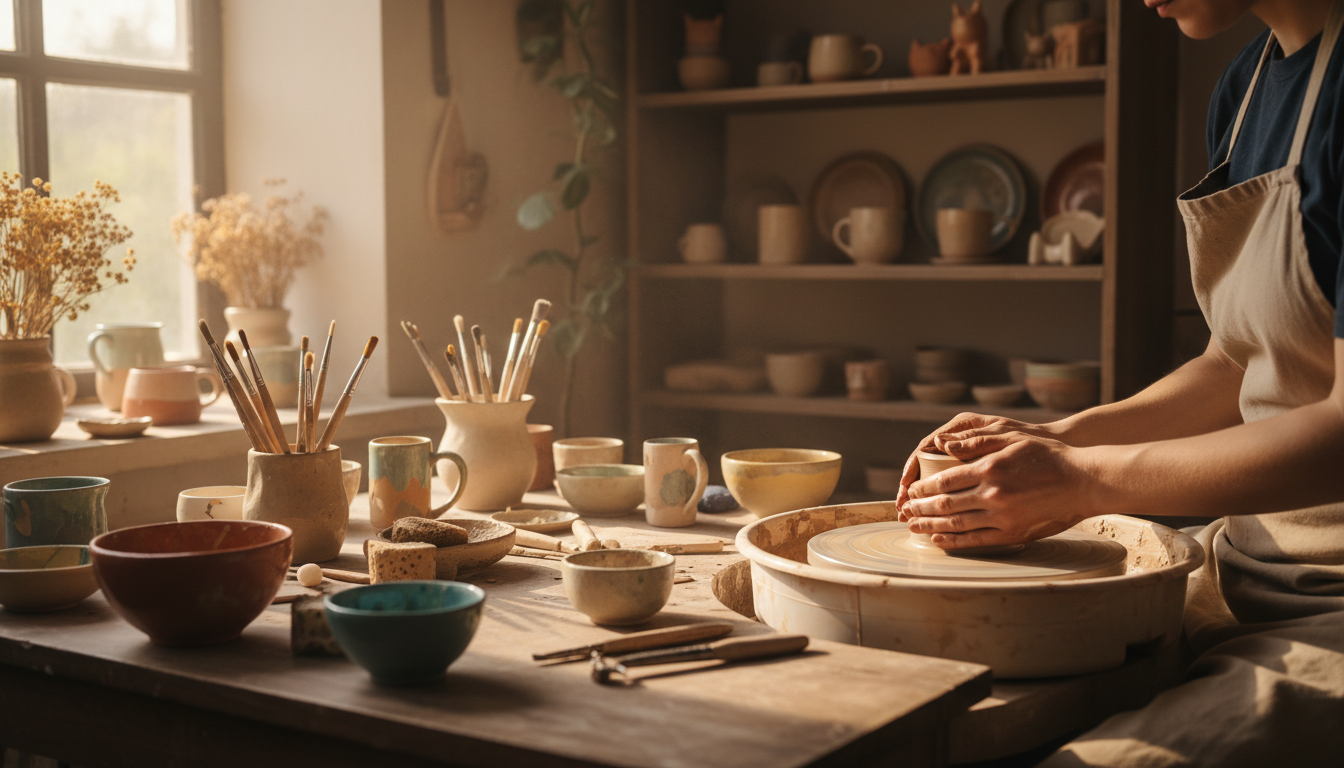
DIY home decor is overtaking mass-produced alternatives as the defining trend of 2026. Homeowners across the country are rejecting cookie-cutter designs and factory-made items in favour of handmade pieces that reflect their individual taste and lifestyle.
The shift marks a significant departure from the past decade’s obsession with perfection and uniformity. Where Instagram-ready minimalism once ruled the roost, homeowners now celebrate imperfection, quirk, and the visible hand of the maker. A wobbly ceramic vase or an off-centre painting carries far more weight than a flawlessly manufactured item that looks identical to a thousand others.
“We’re seeing a real hunger for character and personality,” according to design sources tracking 2026 trends. This hunger isn’t merely aesthetic. It’s also deeply practical. DIY projects cost substantially less than purchasing pre-made equivalents. They’re also more fun. The act of creating something yourself—even imperfectly—builds attachment to your space in ways that shopping cannot replicate.
Why DIY home decor appeals now
Several forces converge to explain the surge. First, inflation has made mass-produced home goods pricey. A handcrafted throw pillow or wall hanging, made from materials you source yourself, often costs a fraction of the designer version. Second, social media has democratised design inspiration. Platforms like Pinterest and Instagram overflow with accessible DIY tutorials. You don’t need formal training or expensive tools to start. Third, remote work has made home environments more important than ever. People spend more time in their living spaces now. They want those spaces to feel authentically theirs.
The appeal also taps into a broader cultural weariness with mass consumption. Thrifted and upcycled items have been popular for years, but DIY takes that logic further. Instead of hunting for a secondhand item that might work, you make exactly what you want from raw materials.
Popular DIY home decor projects for beginners
Not all DIY projects require advanced skills. Some of the most trending options this year are surprisingly simple.
Ceiling hangings and mobiles represent one major category. These pieces transform a blank overhead expanse into a focal point. Creating unique ceiling hangings using beads and wire has become wildly popular with homeowners seeking to add visual interest without commitment. A mobile catches light, moves gently in air currents, and costs just a few hundred rupees in materials. The appeal is obvious: it’s visually striking yet entirely impermanent if you tire of it.
Other trending projects include:
Macramé wall hangings. These knotted textile pieces add texture and warmth to bare walls. Beginner kits are widely available online.
Hand-painted throw pillows. A plain linen cushion cover and fabric paint become a statement piece in under an hour.
Terracotta pot painting. Transform garden pots into coloured sculptures or planters with acrylic paint and a steady hand.
String art. Nail and thread create geometric or representational designs. Minimal tools required.
Fabric wall collages. Cut and arrange fabric scraps into an abstract composition, then mount on cardboard or canvas.
The common thread: all require fewer than five basic tools. Most can be completed in a single weekend. And all produce results that photograph well and spark conversation.
The economics of making versus buying
Consider the maths. A mid-range decorative mobile from a furniture store costs between 2,000 and 5,000 rupees. It matches thousands of other homes. A DIY beaded ceiling mobile, made with wire and beads sourced from a local craft shop, costs perhaps 300–800 rupees. It’s one of a kind.
Scale this across an entire home. Wall hangings, cushion covers, painted pots, artwork. The savings accumulate quickly. More importantly, the investment of time creates psychological value. You’ve made these objects. They represent your choices, your aesthetic, your effort.
For budget-conscious homeowners—a significant portion of the Indian market—DIY doesn’t feel like deprivation. It feels like agency.
Character over perfection: the philosophical shift
The acceptance of imperfection marks a genuine cultural moment. Earlier design trends demanded symmetry, precision, newness. A wobble was a flaw. A hand-painted brushstroke that didn’t align perfectly was a mistake.
Today, that same wobble is evidence of authenticity. The imperfect brushstroke proves a human made it. This shift has real implications for how people approach decoration. You needn’t be skilled. You needn’t aim for gallery-quality results. The goal is simply to make something that feels true to who you are.
This mindset removes a major barrier to entry. Many people avoid DIY projects because they fear failure or producing something “ugly.” But if the definition of beauty now includes imperfection and personality, failure becomes nearly impossible.
Getting started with DIY home decor
Begin small. Choose one project that genuinely excites you. Don’t attempt a full room renovation on your first attempt.
Gather materials locally where possible. Visit craft supply shops, hardware stores, and fabric merchants in your area. Online ordering works too, but local sourcing connects you to your community and often proves cheaper.
Watch tutorials, but don’t treat them as scripture. Your version will differ from the creator’s version. That’s the point.
Invite friends or family to make projects together. The social aspect multiplies the enjoyment. You’ll also benefit from shared ideas and encouragement.
Document your process. Take photos of the finished piece in your home. You might inspire others or simply enjoy having a visual record of what you’ve made.
FAQ
Q: Do I need special skills to start making DIY home decor?
A: No. Most beginner projects require only basic tools and no prior experience. Many trending 2026 DIY projects, like beaded ceiling hangings and hand-painted throw pillows, are specifically designed for newcomers.
Q: How much money can I save by making decor instead of buying it?
A: Significantly. A handmade mobile costs a fraction of a store-bought equivalent, sometimes 25–50% of retail price. Scale this across multiple projects and savings accumulate rapidly.
Q: Where should I buy materials for DIY home decor projects?
A: Local craft shops, fabric merchants, hardware stores, and online platforms all stock materials. Starting locally often reveals options you didn’t know existed and builds connections with shop owners who can suggest ideas.
Q: What if my DIY project doesn’t turn out “perfect”?
A: Imperfection is now considered a feature, not a bug. Visible handmade qualities add character and authenticity. Most imperfect pieces look better in a home than mass-produced alternatives.
Q: How long do most beginner DIY home decor projects take?
A: Most trending projects take between two and eight hours, often completable in a single weekend. Ceiling hangings with beads and wire typically take just a few hours.
