
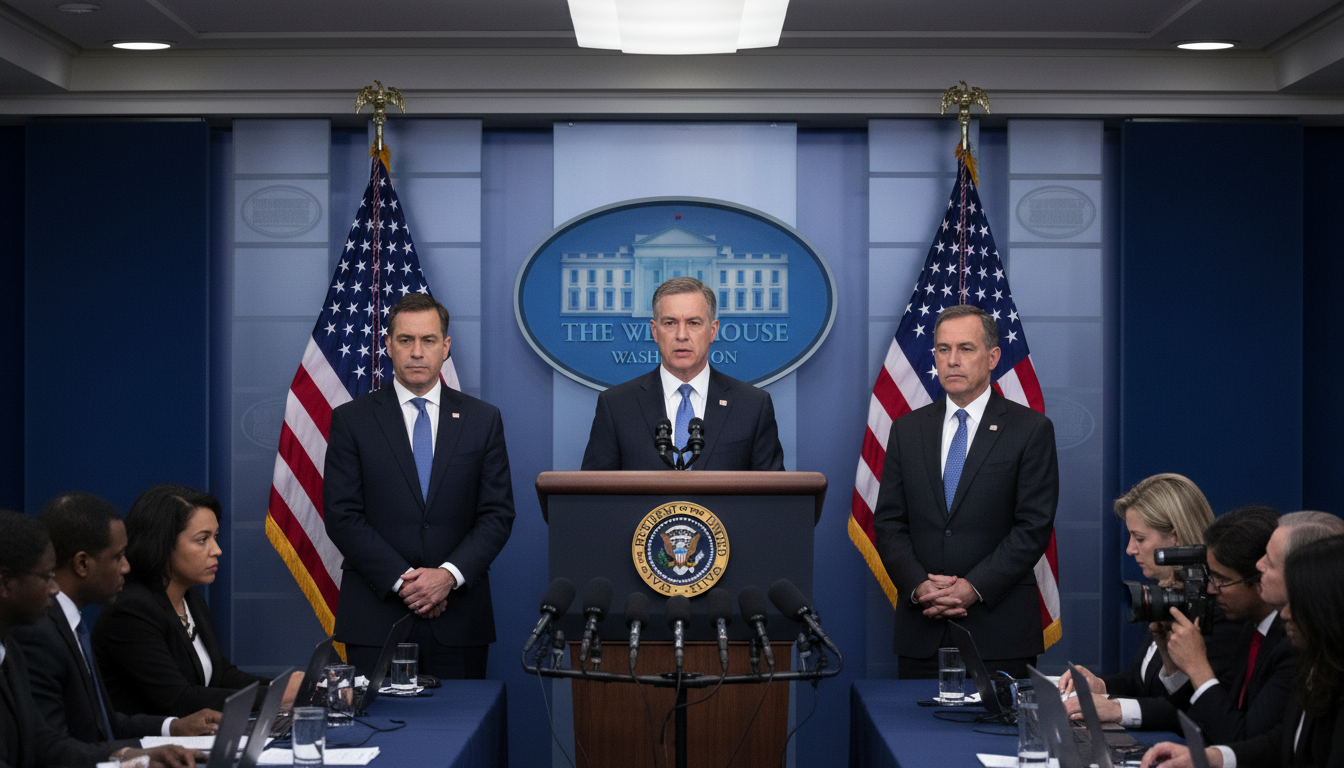
The White House confronts Democrats probes with a stark warning, alleging that planned investigations into the Trump administration amount to potential “blatant criminality” rather than legitimate oversight.
The warning marks an escalation in tensions between the executive branch and Democratic lawmakers preparing a broad agenda focused on scrutinising how the Trump family’s wealth has grown during the administration’s tenure. According to reporting on Trump-Congress dynamics, the White House has cast the Democratic investigations as politically motivated and potentially unlawful.
Administration officials have rejected accusations of wrongdoing outright. They characterise the planned probes as deviations from Congress’s standard oversight function—a distinction that signals the hardening positions on both sides as Democrats prepare to take control of investigative committees.
The White House Confronts Democrats Probes Strategy
The Trump administration is not waiting passively. Instead, it is mounting a preemptive offensive against what Democrats are framing as routine congressional accountability. White House messaging suggests that Democrats are crossing a legal line rather than exercising constitutional authority.
This approach mirrors similar confrontations earlier in Trump’s tenure. The administration’s consistent denial of wrongdoing accompanies dismissals of investigations as witch hunts or politically orchestrated actions. The rhetoric aims to delegitimise Democratic-led inquiries before they formally begin.
Democrats counter that examining the Trump family’s financial interests during the presidency falls squarely within their legislative authority. House Democrats have signalled intent to investigate potential conflicts of interest, business dealings, and financial transactions.
What Democrats Are Planning to Investigate
The Democratic oversight agenda is not narrow. It targets the Trump family’s increased wealth as a central concern. This reflects longstanding questions about whether the Trump Organisation benefited from proximity to executive power.
Specific areas of focus likely include Trump Organisation real estate deals, licensing agreements, and foreign government payments to Trump properties. Democrats have also signalled interest in reviewing tax matters, though any such probe would face procedural hurdles.
The breadth of the planned investigations suggests they will span multiple committees and require subpoena power. This level of scrutiny has prompted the White House’s defensive posture.
Trump Administration’s Denial of Wrongdoing
The Trump administration maintains that it has committed no crimes. This blanket denial extends across all anticipated areas of investigation. Officials argue that the president divested day-to-day control of his businesses when he took office, though he retained ownership interests.
Legal observers note that presidential divestment is not required by law. Presidents need only place assets in a blind trust if they wish to avoid appearance-of-conflict concerns. Trump chose not to do so.
The administration’s refusal to acknowledge any potential impropriety creates a collision course with Democrats who view financial transparency as non-negotiable.
The Legal and Constitutional Questions
The White House’s characterisation of Democratic probes as “blatant criminality” raises its own legal puzzles. Congress possesses broad investigative powers under the Constitution. The power to subpoena witnesses and documents derives from Congress’s legislative function.
However, Congress cannot investigate for purposes wholly unrelated to potential legislation or its constitutional duties. If Democratic investigations aim solely at criminal prosecution—a function reserved for the executive branch—courts might find them improper.
This constitutional tension remains largely untested in modern times. The precise boundaries of permissible congressional investigation remain contested terrain.
Political Calculations and Timing
The confrontation arrives as Democrats prepare for their investigative agenda. The timing is not accidental. By establishing its objections now, the White House hopes to shape public perception of investigations before they begin.
Democrats, conversely, want to signal resolve and seriousness. Backing away from planned investigations would undermine their credibility with voters who demand accountability.
The political stakes are high for both sides. Democrats need to demonstrate that majority status translates into meaningful oversight. Republicans, meanwhile, warn that unchecked investigations set a dangerous precedent for weaponised politics.
Precedents and Historical Context
Congressional investigations into executive branch conduct are not new. Previous administrations faced similar probes. The difference here lies in the focus on a president’s personal business empire.
Earlier investigations—into Watergate, Iran-Contra, or aspects of the Obama administration—centred on official actions or government contracts. This investigation potentially ventures into territory that blurs private enterprise and public office.
That blurring is precisely why Democrats believe investigation is warranted. The Trump family’s business dealings and the presidency are entangled in ways previous administrations avoided.
What’s at Stake
The confrontation between the White House and Democrats reflects deeper questions about presidential accountability. It tests whether a president can shield his personal finances from congressional scrutiny.
For Trump supporters, the investigations represent political revenge dressed in oversight language. For critics, they represent long-overdue accountability.
The investigations will likely proceed regardless of White House objections. Congress controls its own investigative functions. What remains uncertain is whether any investigation uncovers evidence of wrongdoing or whether the process itself becomes the battleground.
FAQ
Q: Can Congress actually investigate the Trump family’s business dealings?
A: Yes. Congress possesses broad investigative powers and can subpoena witnesses and documents. However, investigations must relate to potential legislation or Congress’s constitutional duties. Investigations conducted solely for criminal prosecution purposes face legal challenges.
Q: What specific areas are Democrats planning to examine?
A: Democrats have signalled focus on Trump Organisation real estate transactions, licensing agreements, foreign government payments to Trump properties, and potential financial conflicts of interest. Multiple committees would likely participate.
Q: Has the Trump administration committed crimes, according to its own statements?
A: The Trump administration categorically denies any wrongdoing. Officials maintain that the president divested operational control of his businesses upon taking office, though legal observers note he retained ownership interests.
Q: Can the White House prevent Democratic investigations?
A: No. Congress controls its own investigative functions independently. The White House cannot legally block congressional inquiries, though it can refuse cooperation or challenge specific subpoenas in court.
Q: Why is the White House characterising investigations as “blatant criminality”?
A: The administration appears to be arguing that investigations conducted for political purposes rather than legitimate legislative functions constitute an improper use of congressional power. Legal experts remain divided on this theory’s merit.
