
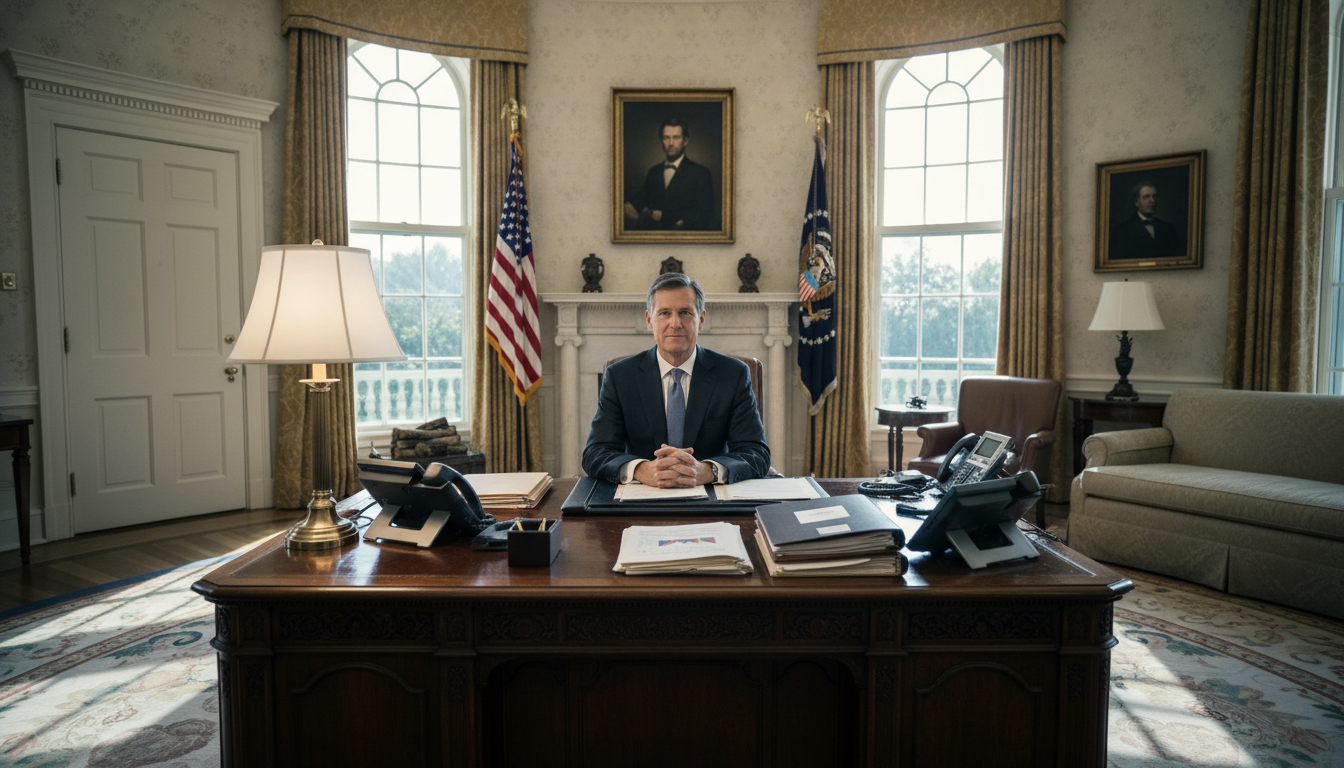
Stephen Miller has been appointed White House Chief of Staff, replacing Susie Wiles in a significant shift within the Trump administration’s inner circle. The move comes as the President signals plans for broader Cabinet changes following recent midterm election setbacks and amid escalating US military and diplomatic pressure against Iran.
Miller’s elevation to one of the most powerful positions in the White House marks a consolidation of influence for the longtime Trump adviser. His appointment signals a hardline direction on both domestic policy and international relations. The timing coincides with renewed US military operations in the Middle East and an aggressive campaign to isolate Iran’s nuclear programme.
White House Chief of Staff appointment signals policy shift
The White House Chief of Staff appointment represents a turning point for the administration’s second term. Wiles, who held the position previously, had been seen as a moderating force in Trump’s orbit. Her departure clears the way for Miller to exercise tighter control over daily operations and policy direction.
Miller is known for his hardline stance on immigration, trade, and foreign policy. He has been instrumental in shaping Trump’s approach to nationalist economic policies and confrontational diplomacy. His new role puts him in direct control of the President’s schedule, decision-making process, and messaging strategy.
The appointment also suggests Trump is willing to make aggressive personnel changes despite—or perhaps because of—recent electoral losses. According to reports, the President plans additional Cabinet replacements in coming weeks. These changes will likely accelerate policy implementation on contested issues, from regulatory reform to international engagement.
Trump plans Cabinet overhaul following midterm results
The midterm election results have prompted Trump to reconsider his entire executive team. Administration officials indicate several Cabinet-level positions may be filled by new appointees with stronger ideological alignment to Miller’s worldview.
The scale of planned changes remains unclear. However, insiders suggest the reshuffles will touch Defence, State, and Treasury departments. Trump has historically used Cabinet positions as leverage to reward allies and punish perceived disloyalty.
Miller’s ascent strengthens the faction within the administration that favours direct confrontation with adversaries. This faction has pushed for tougher stances on trade negotiations, military deployments, and sanctions regimes.
US escalates military and diplomatic pressure on Iran
Amid the domestic reshuffle, the Trump administration has intensified its campaign against Iran. The US recently conducted what officials described as “minor strikes” against Iranian anti-aircraft systems. These operations mark an escalation from previous incidents and reflect a more assertive military posture.
Simultaneously, the State Department has announced a $20 million reward for information leading to evidence of Iran’s nuclear programme activities. The bounty programme represents a shift toward crowdsourced intelligence gathering. It signals the administration’s determination to expose what it views as Iranian deception on nuclear matters.
These moves are coordinated with broader policy objectives. Miller’s appointment to Chief of Staff suggests such aggressive Iran strategy will intensify rather than moderate.
Strategic logic behind the Iran pressure campaign
The timing of military strikes and intelligence rewards cannot be separated from domestic political considerations. The administration seeks to project strength ahead of planned Cabinet changes. A more forceful Iran stance appeals to Trump’s political base.
The strikes themselves were limited in scope and damage. However, they serve a signalling purpose. They demonstrate to Iran, regional partners, and domestic audiences that the US is willing to use military force.
The nuclear reward programme operates differently. It attempts to isolate Iran diplomatically by encouraging defection of its own officials or disclosure by other nations. Combined with economic sanctions already in place, the strategy aims to force Iranian concessions on nuclear negotiations.
International implications and regional response
The appointment of Miller as Chief of Staff will be closely watched by US allies and adversaries alike. European partners have expressed concern about a more unilateral approach to Iran policy. They prefer diplomatic channels and the existing nuclear deal framework.
Middle Eastern allies, particularly Gulf states, have welcomed tougher US stances against Iran. Saudi Arabia and the UAE see American pressure as beneficial to their regional interests. They have signalled support for escalatory measures.
Israel’s government has also signalled approval of the more aggressive posture. Israeli officials have long advocated for stronger US pressure on Iran’s nuclear programme.
China and Russia view the moves with concern. Both nations have economic interests in Iran and worry about further destabilisation of the region.
Domestic political context for the reshuffle
Miller’s appointment must also be understood within Trump’s political strategy for his second term. Midterm losses have emboldened critics within and outside the party. The Cabinet changes represent an attempt to regain momentum and reshape the narrative.
By installing a trusted loyalist as Chief of Staff, Trump signals that he intends to run the White House more personally and less through institutional processes. This approach has both strengths and weaknesses. It allows faster decision-making but increases the risk of policy reversals and internal conflicts.
The Iran escalation provides a useful distraction from domestic political troubles. Foreign policy crises often boost presidential approval ratings in the short term. However, they also carry risks if military operations escalate beyond current limited strikes.
FAQ
Who is Stephen Miller and what is his background?
Stephen Miller is a longtime Trump adviser known for hardline positions on immigration, trade, and foreign policy. He has held various White House positions focused on policy development and implementation.
Why was Susie Wiles replaced as Chief of Staff?
Reports indicate Trump sought a Chief of Staff more aligned with his current policy direction. Miller’s appointment signals a shift toward more aggressive domestic and international policies.
What do the US military strikes against Iran target?
The strikes focused on Iranian anti-aircraft systems. Officials described them as “minor” operations, though they mark an escalation in direct military confrontation.
What is the $20 million reward programme about?
The State Department is offering $20 million for information about Iran’s nuclear programme activities. The programme aims to expose what the US views as Iranian non-compliance with nuclear agreements.
How might these changes affect US foreign policy?
Miller’s appointment suggests US foreign policy will become more confrontational, particularly toward Iran. Cabinet changes will likely reinforce this direction across multiple departments.
