
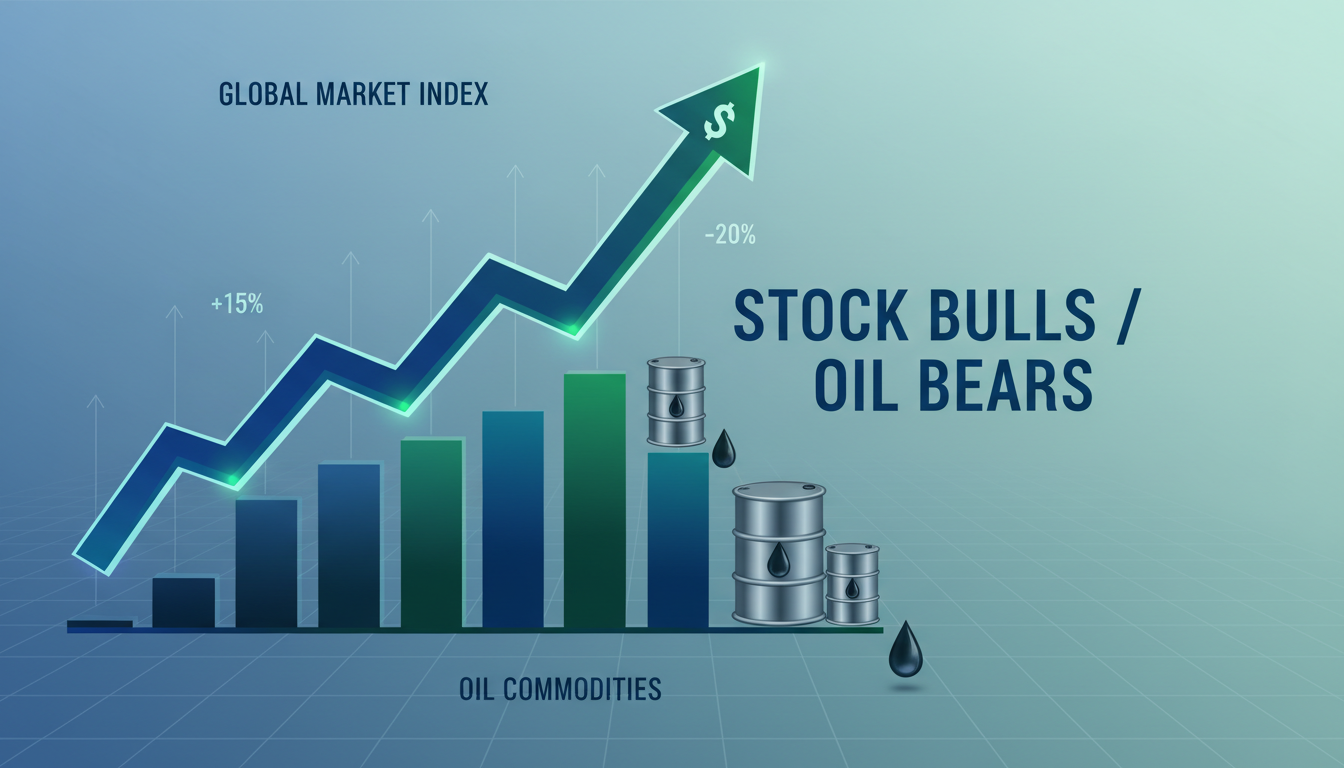
US-Iran oil negotiations drove a sharp retreat in crude prices on Thursday, sending American equities higher as traders shed energy-sector worries and rotated into broader market positions.
The Dow Jones Industrial Average, S&P 500, and Nasdaq all posted gains in the session. Oil’s slide was the catalyst. According to reports, WTI crude and Brent crude both fell sharply on news of diplomatic progress between Washington and Tehran.
At the heart of the move sat Iran’s proposal to reopen the Strait of Hormuz—one of the world’s most critical energy chokepoints—in exchange for the U.S. lifting its blockade. That single offer eased global supply concerns overnight. For months, geopolitical tension in the Gulf had kept a risk premium baked into oil prices. Suddenly, that premium began to unwind.
Why Oil Prices Matter to Stock Markets
Lower energy costs ripple through the entire financial system. Cheaper oil means lower input costs for airlines, shipping companies, and manufacturers. It also signals weaker inflation pressure across the economy, which typically lifts equities by reducing the odds of further aggressive interest rate hikes.
For Indian investors watching U.S. markets, the correlation is direct. India imports roughly 80% of its crude oil needs. When global oil prices fall, the impact shows up in lower inflation, reduced import bills, and stronger rupee stability against the dollar.
The US-Iran Oil Negotiations Framework
Iran’s proposal targets the Strait of Hormuz, through which roughly 21% of the world’s seaborne oil passes daily. The strait had become a flashpoint over sanctions and geopolitical tensions. By proposing to keep it open in exchange for sanctions relief, Iran addressed one of the market’s biggest anxiety points.
The U.S. response remains uncertain. Previous reporting suggests official positions have hardened, but diplomatic channels remain active. Markets are pricing in hope—a delicate position that can reverse swiftly on any negative headline.
What Happened to Bond Markets?
Here’s where the picture gets complicated. Even as stocks rallied, the 10-year Treasury yield remained elevated, hovering near 5.16%. That resilience signals something important: bond traders are not yet convinced inflation is tamed.
A 5.16% yield on long-dated Treasuries is expensive. It reflects lingering concerns about government borrowing costs and sticky price pressures in the economy. The stock market’s enthusiasm over falling oil prices has not yet translated into the bond market’s conviction.
This divergence matters. When stocks soar but yields stay high, it suggests traders are pricing in a temporary relief rather than a durable shift in economic conditions.
Oil Prices and Inflation Dynamics
Lower crude typically filters through to pump prices within weeks. For consumers and businesses, that’s a tangible benefit. Yet commodity-driven inflation relief tends to be temporary unless underlying demand weakens or supply shocks resolve permanently.
The U.S.-Iran negotiations could provide durable relief if they lead to a lasting reopening of the Strait of Hormuz. But one proposal does not a deal make. Traders are betting on best-case outcomes while the bond market hedges its bets.
What the Energy Sector Rally Tells Us
Energy stocks did not rally on lower oil prices—they fell, as expected. Crude producers see shrinking margins. But the broader market’s gain came from non-energy sectors where lower oil inputs mean higher profits: consumer discretionary, technology, industrials.
That rotation is textbook. When geopolitical risk recedes, money flows out of defensive bets and into growth. The rally in equities reflects exactly that pattern.
Impact on Indian Markets and the Rupee
Lower global oil prices strengthen the rupee by reducing India’s current account deficit. That, in turn, can support Indian equity valuations and reduce pressure on foreign exchange reserves.
For Indian institutional investors holding U.S. stocks, the question is whether the U.S.-Iran talks hold. If negotiations collapse, oil will spike again, inflation fears will resurface, and Treasury yields could ratchet higher—a scenario that would crimp both U.S. equities and the rupee’s gains.
The Risks Ahead
Oil markets can reverse course on a single news flash. If U.S. officials reject Iran’s proposal or if tensions flare again, crude could spike back to previous levels within hours.
The Treasury yield staying elevated also suggests that even with falling oil prices, fiscal and monetary concerns persist. The market is not pricing in a soft landing with permanent disinflation; it’s pricing in a brief respite.
Traders should monitor three signals: official U.S. responses to Iran’s Strait of Hormuz proposal, whether the 10-year yield continues to trend lower (signalling bond market conviction in sustained relief), and how far crude prices fall before stabilising at a new floor.
FAQ
Q: What is the Strait of Hormuz and why does it matter for oil prices?
The Strait of Hormuz is a narrow passage between Iran and Oman through which roughly 21% of the world’s seaborne oil flows daily. Disruptions or tensions there immediately trigger supply concerns, raising oil prices globally. Iran’s proposal to keep it open in exchange for sanctions relief addresses a major source of price volatility.
Q: Why did U.S. stocks rally if oil fell?
Lower oil prices reduce input costs for most industries and suggest less inflationary pressure. This allows equities to rise without triggering fears of further interest rate hikes. The broader market gains when energy-sector risks ease.
Q: Does falling oil always mean lower inflation?
Not necessarily. Oil is one input among many. Persistent wage inflation, supply-chain bottlenecks, or fiscal stimulus can offset the benefit of cheaper crude. The 10-year Treasury yield staying near 5.16% suggests bond traders are not yet confident in durable disinflation.
Q: How do U.S.-Iran negotiations affect Indian investors?
India imports most of its crude oil. Lower global oil prices reduce India’s import bills, support rupee strength, and ease domestic inflation. But if negotiations fail and oil spikes again, the opposite occurs—rupee weakness and higher inflation pressure.
Q: Can oil prices reverse if U.S.-Iran talks break down?
Yes, quickly. Oil markets are volatile on geopolitical news. If the U.S. rejects Iran’s proposal or tensions flare again, crude could spike back to prior levels within hours, erasing the day’s equity gains.
