
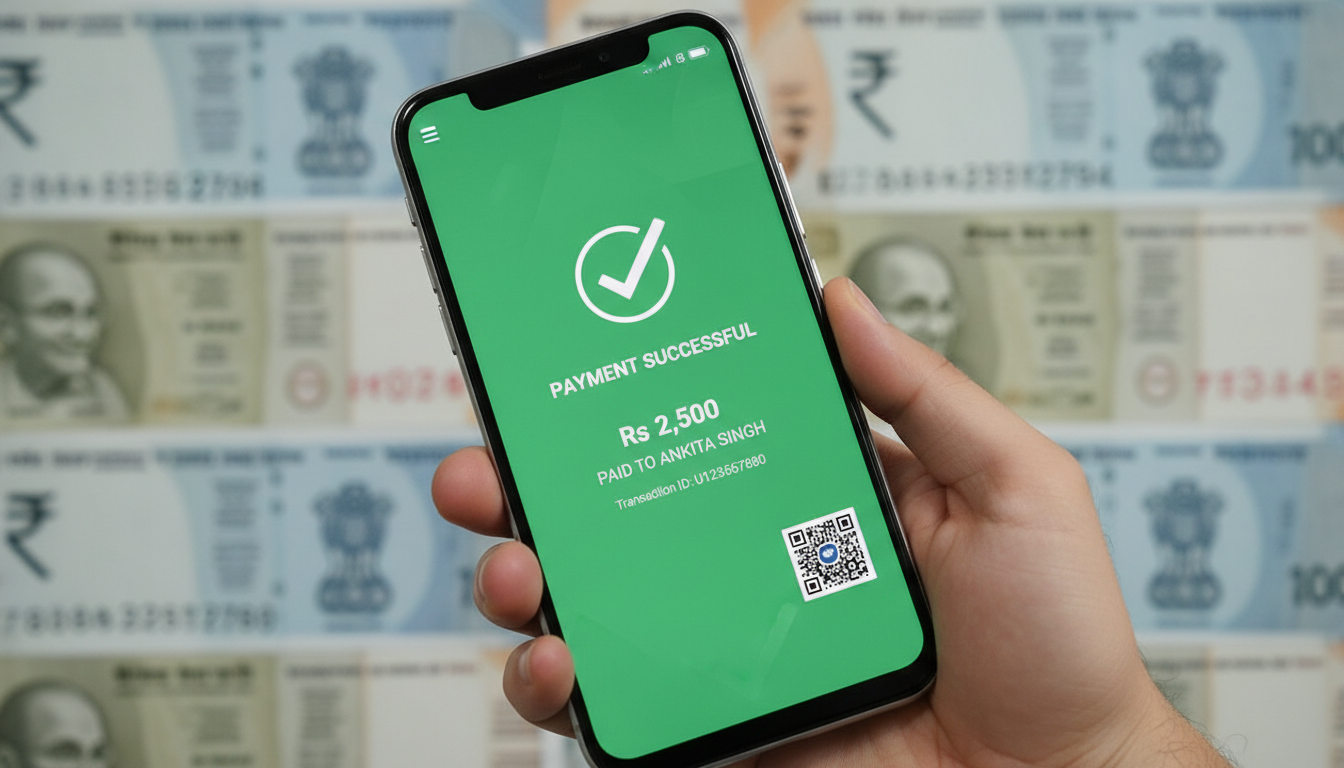
India is introducing UPI merchant fees for the first time, with a 0.4% charge on transactions exceeding ₹2,000 effective October 15, 2026.
The move marks a significant shift for the Unified Payments Interface, which has operated on a largely free model since its 2016 launch. While consumers will continue to use UPI at no cost, merchants processing larger payments will now shoulder the operational burden of keeping the network running.
According to India Today, the new fee structure aims to cover the estimated $2.1 billion in annual operational costs required to maintain and scale India’s digital payments backbone.
Why the UPI merchant fees now?
UPI has become India’s payment workhorse. Last year, the network processed over 12 billion transactions monthly. That scale requires infrastructure, security, settlement systems, and round-the-clock monitoring—all expensive.
The National Payments Corporation of India (NPCI) and the Reserve Bank have faced mounting pressure to make UPI financially sustainable. Until now, the burden fell on banks and payment apps to absorb costs. That model was never meant to be permanent.
Tech Crunch reported that regulators saw the fee introduction as essential to prevent the network from becoming a financial strain on the institutions supporting it.
The ₹2,000 threshold was chosen deliberately. It filters out everyday small purchases—chai, groceries, autorickshaws—while capturing high-value retail, e-commerce, and B2B transactions where merchants have more pricing flexibility.
Who pays the UPI merchant fees?
Not everyone. The structure includes deliberate exemptions.
Merchants processing up to ₹100,000 monthly are entirely exempt from the fee. This protects India’s vast informal economy—small shops, street vendors, and micro-retailers who form the backbone of local commerce.
Certain sectors also avoid the charge. According to the Economic Times, specific industries classified as essential or exempt get relief, though the full list continues to be clarified by regulators.
Large retailers, e-commerce platforms, quick-commerce startups, and restaurants will feel the impact most directly. A ₹5,000 order will now cost merchants ₹20 in UPI fees.
The consumer side remains untouched
Here’s the political reality: consumers will not pay a rupee more.
Payment apps are explicitly prohibited from passing the fee to end users. So whether you send money via Google Pay, PhonePe, Paytm, or your bank’s UPI app, your experience stays free.
This is deliberate policy. The government wants UPI adoption to remain frictionless for the 500+ million Indians now using it. Charging consumers would reverse years of digital payments momentum.
App providers themselves cannot introduce platform fees either. That keeps competition flat and prevents one player from gaining an unfair advantage by subsidizing transactions while others charge.
The merchant absorbs the hit entirely.
What changes on October 15, 2026?
Implementation begins in two months. Merchants need to prepare.
Transactions of ₹2,000 or less: no change. Free, as always.
Transactions above ₹2,000: 0.4% fee applied at point of settlement. For a ₹10,000 transaction, that’s ₹40.
Small merchants under the ₹100,000 monthly threshold should verify their status with their acquiring banks or UPI service providers. Misclassification could lead to surprise charges.
Large retailers should factor the fee into margin calculations. Some may adjust pricing. Others might absorb it as a cost of accepting digital payments.
Payment aggregators and banks will handle collection and remittance automatically. Merchants don’t need to manually submit payments.
Why this matters for India’s fintech scene
The UPI merchant fees decision is a watershed moment for Indian digital infrastructure.
It signals that free-forever models have limits. As networks scale to serve hundreds of millions of users, sustainability becomes non-negotiable.
Other Indian fintech networks—loan platforms, insurance aggregators, stock trading apps—are watching closely. The precedent suggests regulators will eventually expect payment mechanisms to cover their own costs.
For merchants, it’s a reality check. Digital payments now carry a direct cost. Those with thin margins may retreat to cash, especially for medium-value transactions just above the ₹2,000 line.
For consumers, the shield remains. UPI stays free. That was the explicit promise, and regulators have enforced it.
FAQ
Will my UPI payments become paid?
No. The new fee applies only to merchants on transactions above ₹2,000. Consumers pay nothing. Whether you send ₹2,001 or ₹20,000, your cost is zero.
Are all merchants charged 0.4%?
No. Small merchants processing up to ₹100,000 monthly are exempt entirely. Certain sectors also get relief. Merchants should confirm their classification with their bank.
When do UPI merchant fees start?
October 15, 2026. Transactions on or after that date exceeding ₹2,000 will attract the 0.4% fee.
How will merchants pay the fee?
Automatically. Banks and payment processors will deduct the fee at settlement. Merchants don’t manually submit payments.
Why is the threshold set at ₹2,000?
To protect small, everyday transactions while capturing high-value sales where merchants have greater pricing flexibility. It keeps daily commerce friction-free while funding network operations through larger merchants.
