
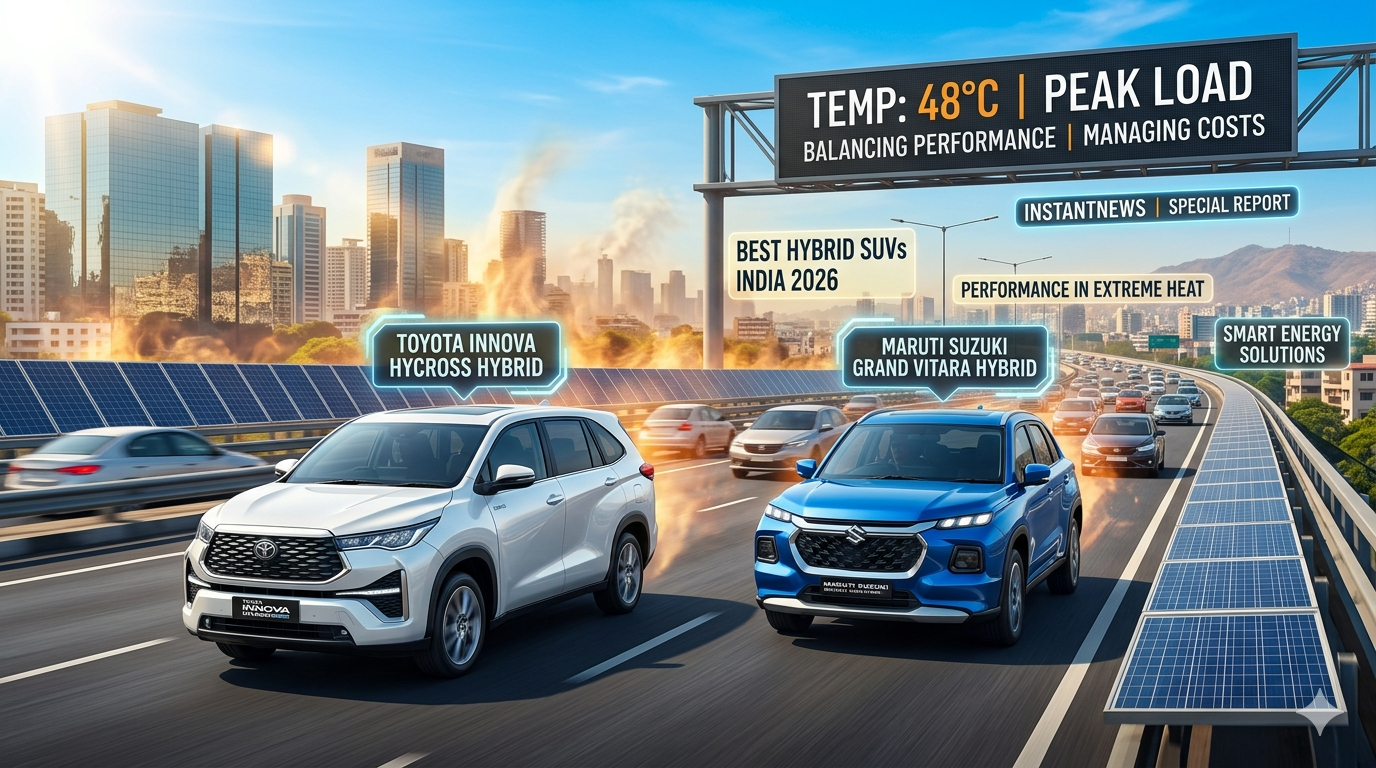
As temperatures across the Indo-Gangetic plain consistently breach the 45°C to 48°C mark in May 2026, the Indian car buyer is no longer just looking for a status symbol. The “SUV craze” has matured into a calculated search for thermal efficiency and fuel hedging. With global energy volatility impacting local pump prices and the grid facing peak summer loads, Strong Hybrid Electric Vehicles (SHEVs) have emerged as the pragmatic middle ground between traditional internal combustion and the burgeoning EV infrastructure.
1. The Thermal Efficiency Challenge
In a typical Indian summer, a vehicle’s air conditioning system can sap up to 15-20% of a standard petrol engine’s power. This is where 2026’s hybrid lineup shines. By utilizing a high-voltage battery to run the compressor independently of the engine, these SUVs maintain cabin cooling even during crawling traffic—without the dreaded “idling drain” that plagues traditional cars.
The Frontrunners of 2026
The Reliability King: Toyota Innova Hycross & Urban Cruiser Taisor (Hybrid Variants)
Toyota continues to dominate the narrative with its 5th-generation hybrid system. The 2026 Hycross remains the benchmark for large families.
- The Performance Edge: Its ability to operate in “EV Mode” for up to 60% of city commutes ensures that stop-and-go traffic doesn’t translate to a plummeted mileage.
- Summer Resilience: The specialized battery cooling tech in the 2026 models prevents the “turtle mode” (power loss) often seen in older hybrids during extreme heatwaves.
The Tech Challenger: Maruti Suzuki Grand Vitara (Alpha+ 2026 Edition)
The partnership between Maruti and Toyota has peaked this year. The 2026 Grand Vitara offers an incredible claimed mileage of 27.9 km/l, making it more economical than most entry-level hatchbacks from a decade ago.
- Why it works now: With the 2026 revision, the regenerative braking system is more aggressive, capturing more energy during downhill drives in hilly regions like Uttarakhand or Himachal, which is vital for domestic summer tourism.
The Premium Entry: Honda Elevate e:HEV
Honda’s dual-motor “i-MMD” technology has finally trickled down to the Elevate. It offers a “sportier” hybrid feel. Unlike others that feel rubber-bandy under hard acceleration, the Elevate e:HEV uses a direct-drive lock-up clutch that makes highway overtaking effortless, even with the AC at full blast.
2. Analyzing the “Summer Energy Cost” Factor
In 2026, the cost of ownership is being redefined by Peak Load Pricing. As electricity DISCOMs implement higher tariffs during day-time charging for EVs, the Strong Hybrid becomes a “self-charging” sanctuary.
- Fuel Hedging: With petrol prices hovering at sensitive levels, the 40% improvement in fuel efficiency offered by hybrids acts as a buffer against inflation.
- The AC Impact: A hybrid SUV’s ability to remain “Engine-Off” at a red light while keeping the occupants in 18°C comfort is its biggest selling point in the current heatwave.
3. Performance: No Longer a Compromise
A common myth from the early 2020s was that hybrids were “boring.” The 2026 crop of SUVs proves otherwise.
- Instant Torque: The electric motor provides that initial “push” that heavy SUVs usually lack, making city darting much easier.
- Total Range: While pure EVs still face range anxiety during long summer trips due to battery discharge from heavy AC usage, these hybrids easily clock 800–950 km on a single tank.
4. Final Verdict: Which One Should You Buy?
If your primary concern is inter-state travel and maximum cooling efficiency, the Toyota Hycross remains unbeatable. However, for the urban professional navigating the concrete jungles of Delhi, Mumbai, or Bengaluru, the Maruti Grand Vitara or Toyota Hyryder offers the best ROI (Return on Investment) through fuel savings.
As we navigate this record-breaking summer, the shift toward hybrid technology isn’t just a trend—it’s a survival strategy for the Indian motorist’s wallet.
