
The promotion policy of a Probationary Officer in the State Bank of India is one of the most structured and performance-driven systems among public sector banks in India. For candidates preparing for SBI PO 2026, understanding the complete promotion process is essential to evaluate long-term career growth, salary progression, and leadership opportunities.
This detailed guide explains SBI PO promotion policy 2026, eligibility for promotion, internal exams, fast-track promotion route, time-bound advancement, and career growth up to top management.
SBI PO Promotion Structure 2026 Overview
SBI follows a structured managerial hierarchy. A Probationary Officer (PO) enters at Junior Management Grade Scale-I (JMGS-I) and gradually progresses to senior executive levels.
SBI PO Promotion Hierarchy
- Probationary Officer (JMGS-I)
- Assistant Manager (MMGS-II)
- Deputy Manager (MMGS-III)
- Chief Manager
- Assistant General Manager (AGM)
- Deputy General Manager (DGM)
- General Manager (GM)
- Chief General Manager (CGM)
- Chairman / Managing Director
This structured promotion ladder ensures stability and long-term career growth in SBI.
First Promotion of SBI PO (JMGS-I to MMGS-II)
The first promotion is one of the most important milestones in an SBI PO’s career.
Eligibility for First Promotion
An SBI PO becomes eligible for promotion after completing a minimum service period, generally around 3–5 years (subject to policy updates).
Promotion is based on:
- Internal written examination
- Performance appraisal reports (APAR)
- Interview round
- Business target achievements
High-performing officers may qualify earlier through the merit channel.
SBI PO Promotion Channels
SBI follows two primary promotion channels:
1. Normal Promotion Channel
Based on seniority and performance consistency.
2. Fast Track / Merit Channel
For officers with:
- Outstanding performance ratings
- Strong business development results
- High appraisal scores
- Success in internal promotional exams
Fast-track officers move to Middle Management Grade Scale-II faster than peers.
Internal Promotion Exam Pattern
Promotion exams usually include:
- Banking law and practices
- Credit management
- Risk management
- General banking awareness
- Case studies
The internal exam tests managerial capability, not just theoretical knowledge.
Clearing these exams significantly improves promotion chances.

Time-Bound Promotion in SBI
SBI also provides time-bound promotion benefits if an officer consistently maintains satisfactory performance.
Typical progression timeline (approximate):
- 3–5 years → Assistant Manager (MMGS-II)
- 6–8 years → Deputy Manager (MMGS-III)
- 10–12 years → Chief Manager
Actual promotion speed depends on performance and internal selection criteria.
Performance Appraisal and APAR Role
Annual Performance Appraisal Report (APAR) plays a crucial role in SBI PO promotion policy.
Evaluation parameters include:
- Achievement of business targets
- Loan recovery performance
- Customer service quality
- Compliance record
- Leadership ability
Officers with consistent “Excellent” ratings gain faster career growth.
Career Growth After 10 Years
After a decade of service, a high-performing SBI PO may reach:
- MMGS-III or Chief Manager level
At this stage:
- Salary significantly increases
- Responsibility expands
- Branch head role becomes possible
This is where managerial leadership becomes visible.
| Promotion Level | Approx Years Required | Scale |
|---|
| Probationary Officer | Entry Level | JMGS-I |
| Assistant Manager | 3–5 Years | MMGS-II |
| Deputy Manager | 6–8 Years | MMGS-III |
| Chief Manager | 10–12 Years | SMGS-IV |
Senior Management Growth Path
Reaching top management requires:
- Strong leadership record
- Exceptional performance
- Strategic business handling
- Clean compliance history
From AGM to GM level, selection becomes highly competitive and based on internal assessment and strategic contribution.
SBI PO Promotion vs Other Banks
Compared to many public sector banks, SBI offers:
- Faster growth opportunities
- Better exposure to diverse branches
- International posting possibilities
- Higher brand value
The scale and network of SBI make managerial growth broader and more impactful.
Work Location and Transfer Impact on Promotion
SBI follows a transferable job structure.
Serving in rural and semi-urban branches positively impacts:
- Promotion eligibility
- Exposure rating
- Performance diversity
Officers willing to take challenging postings often progress faster.
SBI PO Promotion and Salary Growth
Promotion directly impacts salary.
With each scale upgrade:
- Basic pay increases
- Allowances increase
- Leadership allowance may apply
- Gross salary can cross ₹1 lakh per month in mid-management
Thus, promotion is directly linked to financial growth.
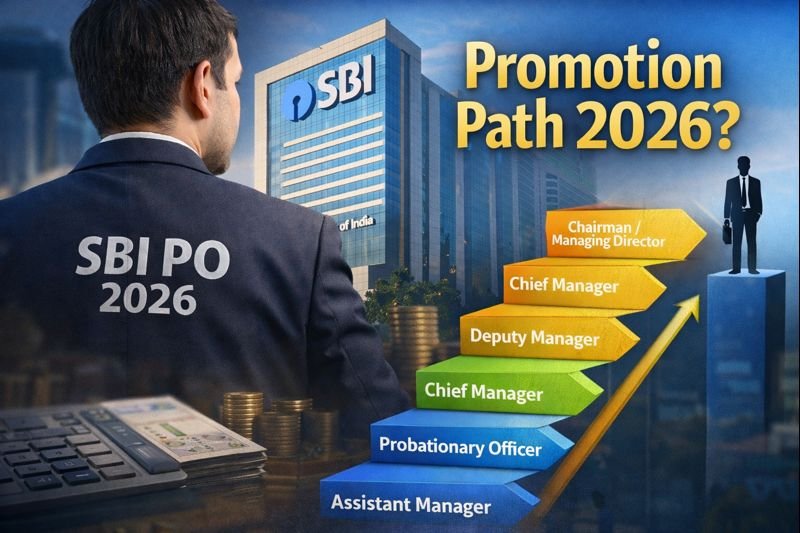
Visual Overview of SBI Career Growth

The structured hierarchy and nationwide presence make SBI one of the most attractive banking careers in India.
Fast Track Promotion Strategy for SBI PO
If you want faster growth:
- Focus on achieving business targets consistently
- Maintain excellent compliance record
- Prepare seriously for internal promotion exams
- Take challenging branch postings
- Build strong leadership and credit assessment skills
Merit channel promotions depend heavily on performance.
Is SBI PO Promotion Policy Worth It in 2026?
Considering:
- Structured hierarchy
- Performance-based growth
- Salary increase with each scale
- Long-term executive opportunities
SBI PO remains one of the strongest long-term government banking careers in India.
Promotion policy is transparent, structured, and performance-oriented.
For aspirants preparing for SBI PO 2026, this role is not just about starting salary but about sustainable career growth over 20–25 years. So we can conclude that SBI promotions are really fast and one of fastest in any industry
Frequently Asked Questions
How many years does it take for SBI PO promotion?
Typically 3–5 years for first promotion, depending on performance and exam clearance.
Is SBI PO promotion automatic?
No. Promotion depends on internal exams, performance appraisal, and eligibility criteria.
Can SBI PO become General Manager?
Yes, with consistent performance and years of service, officers can rise to senior management positions.
