
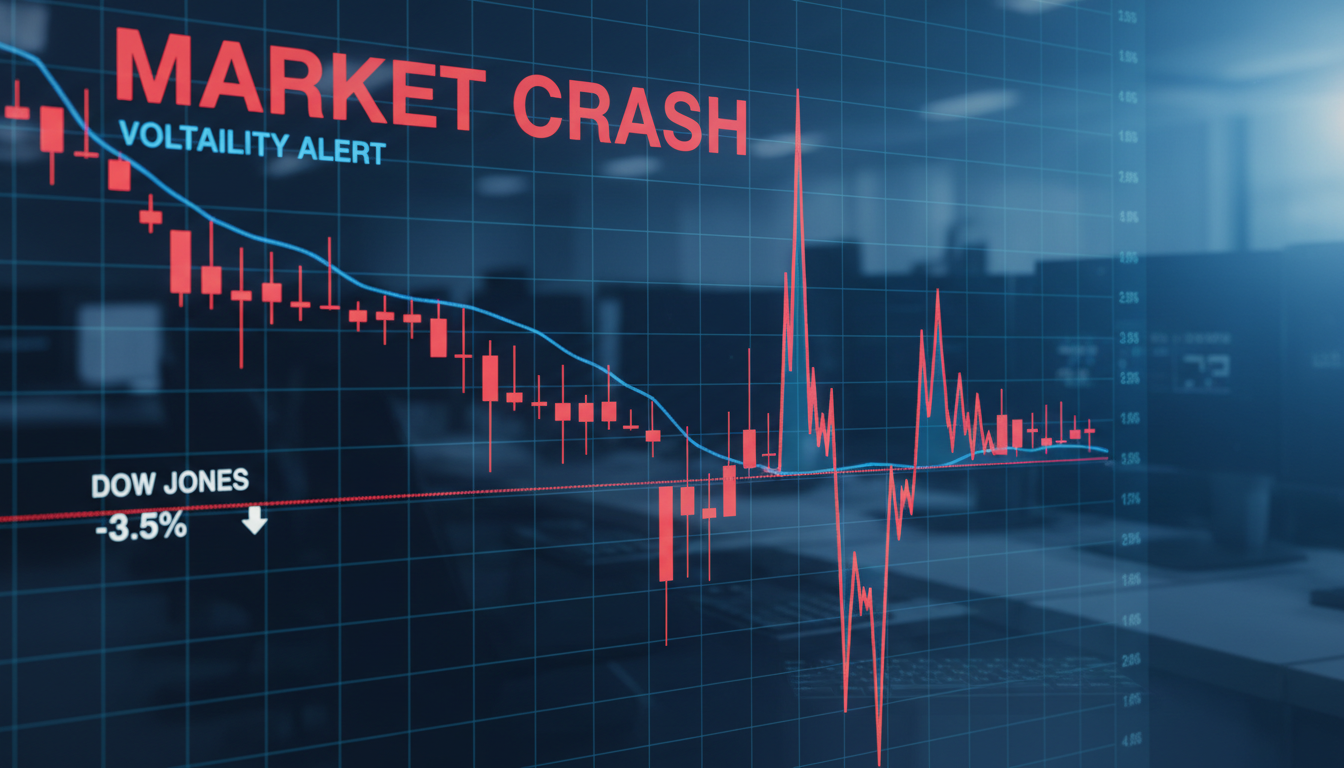
An AI stocks sell-off has sent major US equity indices reeling, with the Nasdaq Composite plummeting 5% and entering correction territory following a Democratic sweep in the US midterm elections.
The sell-off marks a sharp reversal in investor sentiment. The S&P 500 fell 3.5% in a single session, registering its largest one-day market capitalisation loss since April 2025. Semiconductor and artificial intelligence stocks bore the brunt of the selling pressure, with chip makers leading declines across the tech-heavy index.
The turnaround reflects a fundamental shift in how investors view the post-election landscape. A Democratic victory, while delivering gains in some traditional sectors, has spooked technology investors who had positioned themselves for different policy outcomes.
Market Volatility Reaches April Highs
Volatility spiked sharply during the sell-off. The VIX, Wall Street’s so-called fear gauge, surged to levels not seen since April. According to CNBC’s market analysis, traders are pricing in elevated uncertainty ahead.
The VIX surge signals genuine concern about near-term market direction. When institutional investors become nervous, they buy volatility protection, which in turn pushes the index higher. This creates a feedback loop that can amplify market swings.
Fund managers have begun repositioning aggressively. Large cap tech stocks that had benefited from artificial intelligence enthusiasm in recent months suddenly attracted selling flows. The rush for the exits accelerated as stop-loss orders got triggered.
AI Stocks Sell-off Deepens Sector Rot
The AI stocks sell-off wasn’t uniform. Mega-cap technology names that dominate the Nasdaq saw particularly sharp declines. Semiconductor companies, which supply the chips needed for AI infrastructure, experienced even steeper losses.
Investors are questioning whether AI enthusiasm got ahead of fundamentals. Some portfolio managers worry that valuations had stretched too far. A Democratic sweep might also bring stricter regulations on technology companies and data privacy—concerns that weigh on growth stocks.
The retreat from AI-exposed positions also reflects profit-taking. Funds that rode the artificial intelligence rally upward needed to lock in gains. When selling starts, it often accelerates quickly in crowded trades.
According to Yahoo Finance’s market coverage, chip stocks led the Nasdaq decline. Names that had delivered strong returns throughout the year faced sudden headwinds.
Energy Sector Shows Stability
Not all sectors stumbled. Oil prices found footing after months of pressure. Brent crude futures fell nearly 9% overnight but have stabilised around recent lows.
Energy stocks benefited from the market turmoil. When investors rotate away from growth plays, they sometimes seek refuge in economically sensitive sectors or dividend-paying stocks. Oil majors offer both exposure to commodities and steadier cash flows.
The energy sector’s relative resilience suggests investors aren’t fleeing to pure safety trades. Instead, they’re reshuffling within a framework of lower overall risk.
Election Results Drive the Rotation
The “blue wave” outcome changed calculus across Wall Street. Democratic control of Congress raises the prospect of increased corporate tax rates and tighter tech regulation.
These policy risks hit growth stocks hardest. Technology firms already trading at premium valuations become less attractive when profit margins face pressure. By contrast, energy and infrastructure stocks could benefit from Democratic infrastructure spending priorities.
According to Euronext’s analysis, the election result triggered immediate sector rotation flows. Investors who had concentrated holdings in artificial intelligence and semiconductors began diversifying into different areas.
This type of post-election repositioning isn’t unusual. Markets typically reprices risk once election outcomes become clear and policy direction becomes more certain.
Correction Territory for Nasdaq
The Nasdaq’s 5% decline officially marks a correction—a 10% drop from recent highs would constitute a bear market territory. Whether the index recovers quickly or extends losses depends on how investors assess the new political environment.
Fund managers face tricky decisions. Do they see this as a temporary pullback or a signal of deeper problems? Valuations in semiconductor and AI stocks have compressed sharply in just a few trading sessions.
History shows that corrections aren’t uncommon. Markets typically experience at least one annual pullback of 10% or more. The question for investors is whether this sell-off finds support here or continues lower.
FAQ
Q: Why did AI stocks fall after the midterm elections?
A: Investors fear a Democratic Congress will raise corporate taxes and impose stricter technology regulation. Growth stocks like AI and chip companies are most vulnerable to policy changes and margin pressure.
Q: What is the VIX and why did it surge?
A: The VIX is the market’s fear gauge, measuring expected volatility. It rose to April 2025 highs as traders bought protective options, signalling concern about near-term market direction.
Q: Did all sectors decline equally?
A: No. Semiconductors and AI stocks led declines. Energy stocks showed relative strength as investors rotated away from growth plays into more economically sensitive areas.
Q: Is the Nasdaq in a bear market?
A: Not yet. A 5% decline is a correction. A bear market requires a 20% drop from recent highs. However, further selling could push the index into bear territory if losses extend.
Q: Could oil prices fall further?
A: Brent crude has stabilised around recent lows after falling 9% overnight, suggesting buyers are entering at current levels. Energy market dynamics depend on demand outlook and geopolitical factors beyond election results.
