
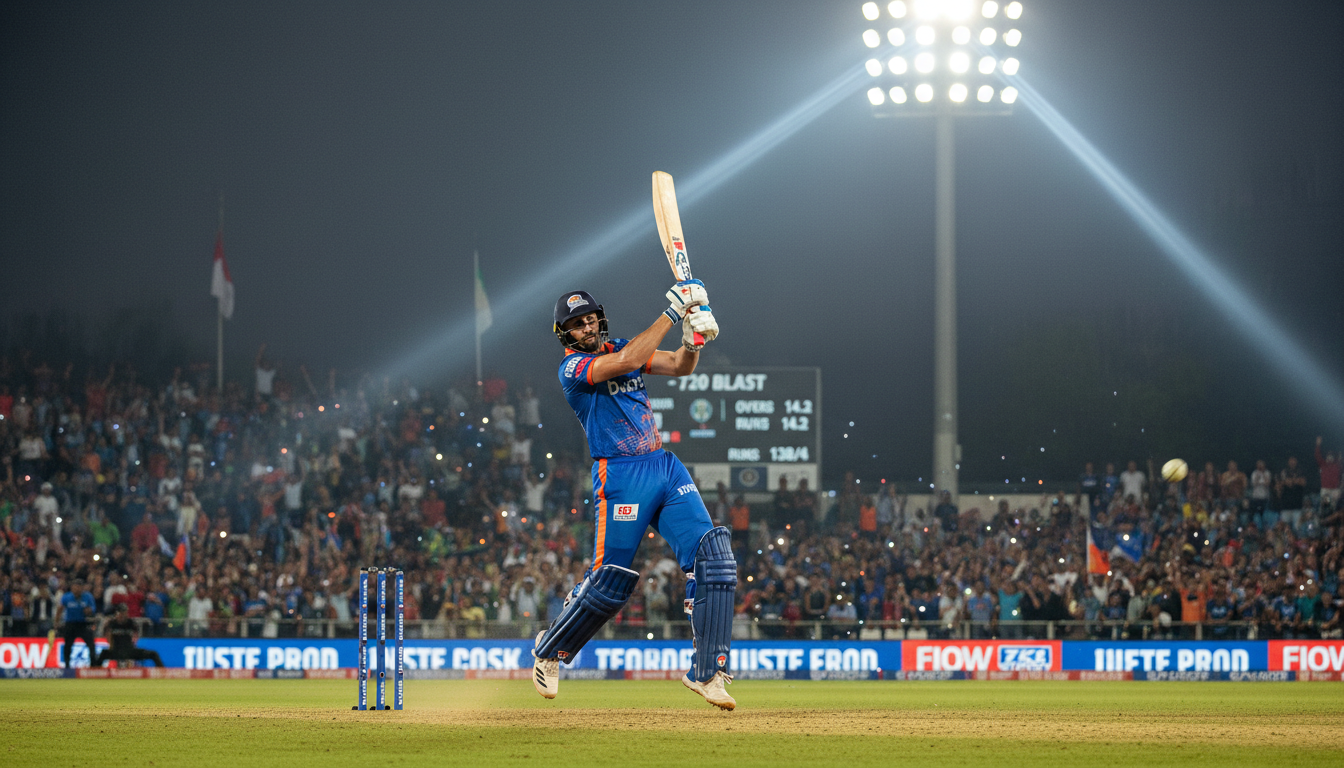
India vs Afghanistan T20I series sweep is now complete after a dominant 127-run victory in the third match, giving the Men in Blue a clean 3-0 whitewash. The emphatic win capped off an assured performance that left Afghanistan searching for answers across the three-match contest.
The series-clinching victory was built on a brutal batting display. Abhishek Sharma’s 108 off just 34 balls proved to be the cornerstone of India’s innings, marking the fastest T20I century against a Test-playing nation. The blistering pace of his scoring left the Afghan bowling attack with no margin for error. It also overshadowed other contributions that might otherwise have dominated headlines.
Sanju Samson’s unbeaten 50 added substance to India’s total. Together with Sharma’s explosive assault, it left Afghanistan needing an unrealistic run chase on the night. The depth of India’s batting order shone through—not just in individual performances, but in the way batsmen kept the foot on the accelerator without hesitation.
Bowling Strength in India vs Afghanistan T20I series sweep
India’s bowling unit proved equally clinical once the bat was put away. Nitish Kumar and Ravi Bishnoi each claimed three wickets. Their combined haul of six wickets strangled Afghanistan’s batting powerplay and middle overs. The spin options, in particular, found purchase on what appeared to be a turning surface.
Bishnoi has been a consistent feature of India’s T20I bowling setup for some time. His three-wicket performance here reaffirmed why selectors continue to back him in this format. Nitish Kumar’s contribution was equally valuable, suggesting India has options beyond the usual suspects in the bowling department.
Afghanistan managed little resistance with bat in hand. Chasing 200-plus runs against a disciplined Indian bowling attack proved beyond them. The gulf in quality became apparent as the innings wore on.
Abhishek Sharma’s Record-Breaking Performance
Abhishek Sharma’s 108 off 34 balls sits alone at the top of a very specific record: the fastest T20I century by any batter against a Test nation. This distinction matters because it separates his achievement from centuries scored against associate nations, which carry less weight in cricket rankings.
The youngster struck 10 fours and 7 sixes in his knock. His strike rate of over 300 put Afghanistan’s bowlers in a position where containment became impossible from the outset. Each boundary seemed to build momentum rather than close a chapter.
Sharma’s performance stands out in India’s recent T20I cricket. Young talents often struggle with consistency at the international level. Yet here was a player who arrived and took the game by the scruff of the neck. Whether this marks the beginning of a sustained run or a flash of brilliance remains to be seen. His selection in future squads will provide the answer.
Afghanistan’s Series Struggles
Afghanistan came into this series as a Test-playing nation with growing credibility in white-ball cricket. The T20I format has seen them compete respectfully against many sides. A clean sweep against them is no small matter, even if the visitors struggled to match India’s intensity.
The 127-run margin of defeat—the largest in this series—suggested Afghanistan’s batsmen could not build partnerships of substance. When two or three quick wickets fall in succession, chase becomes near-impossible. India’s bowling gave them no room to recover.
Afghanistan will take positives from the series, even in defeat. They pushed India in patches and showed moments of fight. But ultimately, consistency across the three matches eluded them.
Series Context and Rankings
A 3-0 series sweep improves India’s T20I record significantly. Clean sweeps are rare in bilateral cricket, where opposition sides typically steal at least one match. This one reflects India’s depth and preparation for the format.
India continues to dominate T20I cricket at home. Foreign touring sides often struggle with the conditions and the quality of Indian cricket. Afghanistan, despite recent improvements, fell into that category here.
FAQ
Q: What was Abhishek Sharma’s exact strike rate in his T20I century?
A: Sharma scored 108 runs off 34 balls, which gives a strike rate of 317.65. This extraordinary rate demonstrates the explosive nature of his batting.
Q: How many times has India completed a 3-0 series sweep against Test nations in T20I cricket?
A: The facts provided do not specify how many previous 3-0 sweeps India has achieved. However, sweeps remain relatively uncommon in international cricket due to the competitive nature of bilateral series.
Q: Did Abhishek Sharma’s century break any previous T20I records?
A: Yes. His 108 off 34 balls is the fastest T20I century against a Test-playing nation. Earlier centuries in this format typically took more balls to reach the 100-run mark.
Q: Which bowlers stood out for India in the series-clinching match?
A: Nitish Kumar and Ravi Bishnoi were the standout performers. Both took three wickets each to restrict Afghanistan’s batting.
Q: What was the margin of victory in the third T20I?
A: India won by 127 runs, representing a dominant performance with the bat and decisive bowling.
